A Short Visit to the Bavarian Capital: Munich, Germany 🇩🇪
One day, a million moments in the Beer Capital of the World 🍻


Munich is a city that should not work as well as it does. It is simultaneously one of the wealthiest cities in Europe and one of the most unpretentious. It has world-class museums, a symphony orchestra of global standing, and baroque architecture that stops you mid-stride, yet its most beloved gathering places are still the beer gardens where Bavarians of every background sit elbow to elbow at long wooden tables under chestnut trees, drinking from one-liter steins as though nothing in the world is more reasonable.


Founded in 1158 on the banks of the Isar River, Munich grew from a small monastic settlement into the proud capital of Bavaria, a kingdom that resisted absorption into a unified Germany until the last possible moment and never entirely let go of its distinct identity. That independence of spirit is still present. Munich feels Bavarian before it feels German, a distinction locals will make for you if you forget to make it yourself.
Travels:
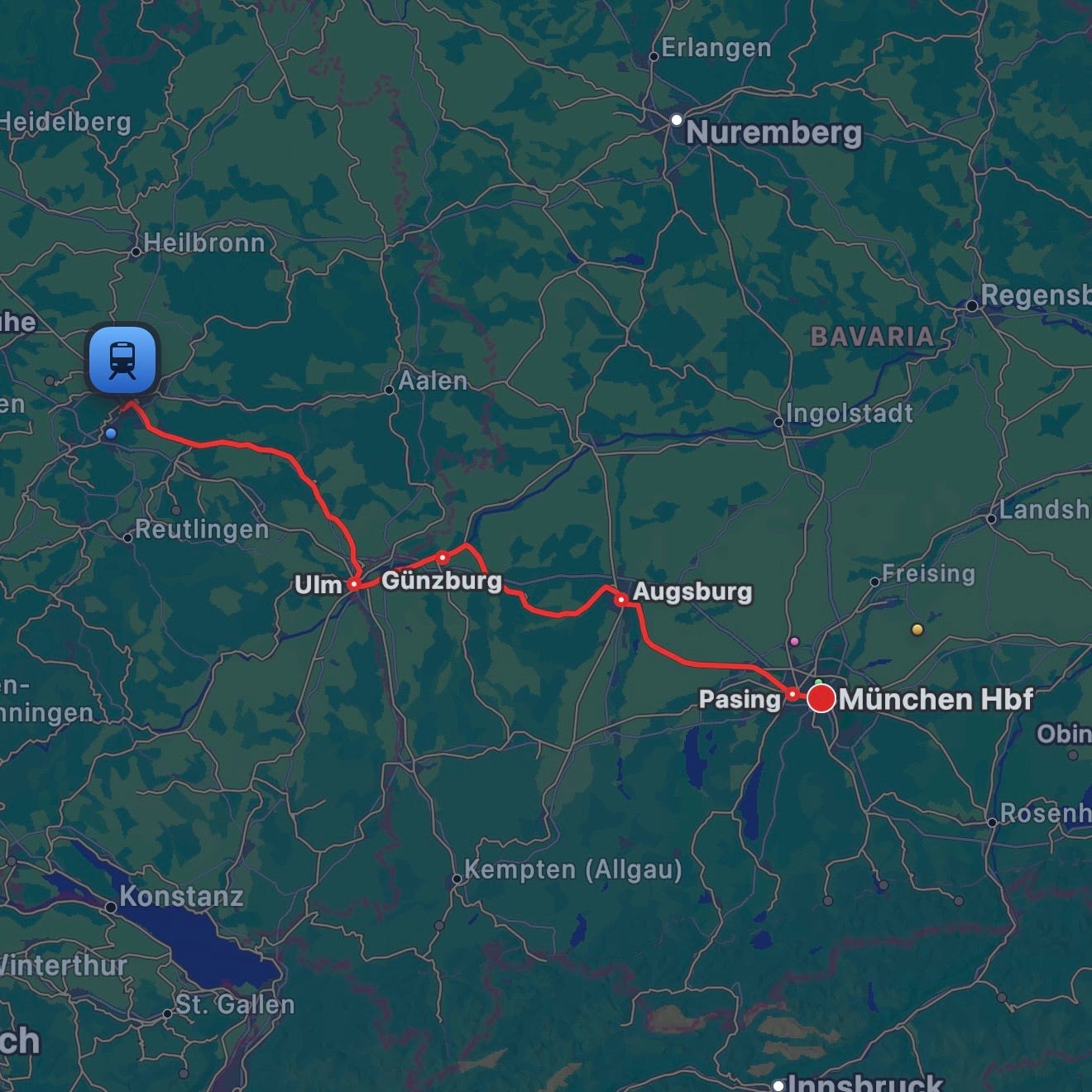
Deutsche Bahn | ICE 591: Stuttgart ➡️ Munich
🚉 09:15 CEST Stuttgart Hbf
🚉 11:13 CEST München Hbf
Duration: 1 hr, 58 mins

Stay:
Hotel Deutsche Eiche (3-Star Superior Hotel | 4.5 ⭐️ 🏳️🌈)
Reichenbachstraße 13, 80469 München
Located near Gärtnerplatzviertel and 10 mins walk to Deutsches Museum.
The restaurant located on the first floor offers breakfast buffet for €20 per person or a-la-carte items from 7AM until midnight.
The rooftop terrace opens from 7AM until 10PM. No reservation required.
While the hotel welcomes guests of all genders, it offers a men-only sauna operating from noon to 7 AM, with continuous hours on weekends and holidays. 🔞
Activities:
Deutsches Museum (4.5 ⭐️)
Museumsinsel 1, 80538 München
The museum has 7 year-round exhibitions and 1 special exhibition. Highly suggest to visit the Air & Space and Musical Instruments exhibitions.
Free admission with Munich City Pass.


Olympiapark München | Munich Olympic Park (4.7 ⭐️)
Spiridon-Louis-Ring 21, 80809 München
The Olympiapark is located in the Oberwiesenfeld neighborhood and was constructed for the 1972 Summer Olympics.
The park is about 10 mins walk from the U3/U8 Olympiazentrum Station to the Olympic Park and the BMW Headquarters.
The park comprises the original ceremony stadium, observation tower, aquatics center, and multi-purpose arenas.


Englischer Garten | English Garden (4.7 ⭐️⭐️⭐️⭐️⭐️)
Englischer Garten, 80538 München
Accessible by U3/U6, bus to Chinese Tower, and tram to Tivolistraße.
The Englischer Garten is Munich’s largest public park with multiple cultural houses, restaurants, and trails. The creation of the park began in 1789, and it continuously expanded and improved until it was officially opened in the spring of 1792.
The park’s main attractions include the Japanese Teahouse, Schönfeldwiese, Monopteros, Eisbach (an artificial surf site), and the Chinese Tower.


Marienplatz | Mary's Square (4.7 ⭐️)
Marienplatz, 80331 München
Accessible by multiple U-Bahn and S-Bahn trains at Marienplatz Station.
Marienplatz (Mary's Square, St. Mary or Our Lady's Square) has been the city's main central square since 1158. It is the home of both Munich’s old and New City Hall.


KZ-Gedenkstätte Dachau | Dachau Concentration Camp Memorial Site (4.7 ⭐️)
Pater-Roth-Straße 2A, 85221 Dachau
Take S2 or RB16 from München Hbf and 726 from Dachau Bahnhof. (Zone 2 ticket required.)
KZ-Gedenkstätte Dachau was one of the first created and the longest-running concentration camps opened by Nazi Germany on March 22, 1933.
The camp was initially intended to imprison the Nazi Party’s political opponents into forced labor, which consisted of communists, social democrats, and other dissidents. As the war progressed, it eventually included the Jews, Romani, Germans, Austrians, and LGBT citizens that the Nazi Party regarded as “criminals”.
The camp was located about 10 mi northwest of Munich, on the grounds of an abandoned munitions factory in the northeast of the medieval town of Dachau.
After the WW2, the camp was served as a resettlement camp for the ethnic Germans who had been expelled from eastern Europe and a facility to hold SS soldiers awaiting trial. The camp was finally closed in 1960.
Plan to visit early and spend half a day at the memorial site.


Travel Tips:
Munich Card
Discounted entries to over 100 places.
Options to include public transportations to MVV Zone M or Zone M-6.
Munich City Pass (Recommended)
Free admission to 45 attractions and tours.
Options to include public transportations to MVV Zone M or Zone M-6.